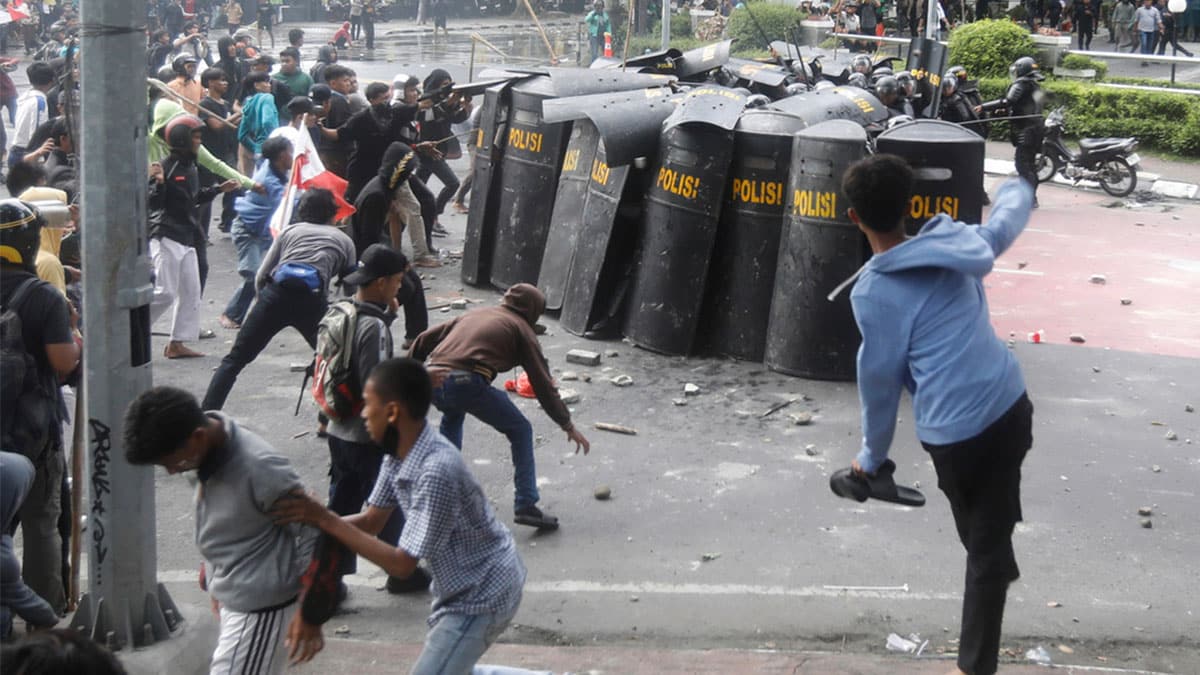
Several student and civil society groups in Indonesia have called off their planned protests in Jakarta today, citing the heavy security presence across the capital following a week of unrest over parliamentary perks.
The demonstrations, initially sparked by frustration over what many saw as excessive allowances for lawmakers, had escalated into violent clashes after a police vehicle fatally struck a motorcycle taxi driver. In response, President Prabowo Subianto ordered security forces to take strict action against rioters and looters after homes of political figures and state buildings were attacked. Armored vehicles and checkpoints were deployed throughout Jakarta, particularly around the Parliament complex.
The Alliance of Indonesian Women, a coalition of women-led civil society groups, said they postponed their demonstration outside Parliament to avoid potential crackdowns. A broad student coalition also cancelled their protest, describing the conditions as “very impossible” due to the overwhelming police and military presence. Despite the withdrawals, smaller rallies were still expected in cities such as Purwakarta and Yogyakarta, though it remained unclear if they would proceed. Social media warnings about fake protest calls also spread widely, adding to public uncertainty.
The unrest rattled financial markets, with Indonesia’s Jakarta Composite Index dropping more than 3% in early trade, while the rupiah initially fell nearly 0.9% before recovering later in the day. Nevertheless, government officials maintained confidence in the country’s economic fundamentals. Chief Economic Minister Airlangga Hartarto pointed to 5.12% year-on-year growth in the second quarter, the fastest pace in two years, and announced plans for a stimulus package to offset the impact of the unrest. The government also promised new investment incentives and expanded social programs, including free meals for students and pregnant women. Meanwhile, Bank Indonesia pledged to step in to support the rupiah if necessary.
After a turbulent week marked by anger, tragedy, and tightening security, Indonesia now faces the challenge of restoring calm and rebuilding public confidence, both on the streets and in its markets.