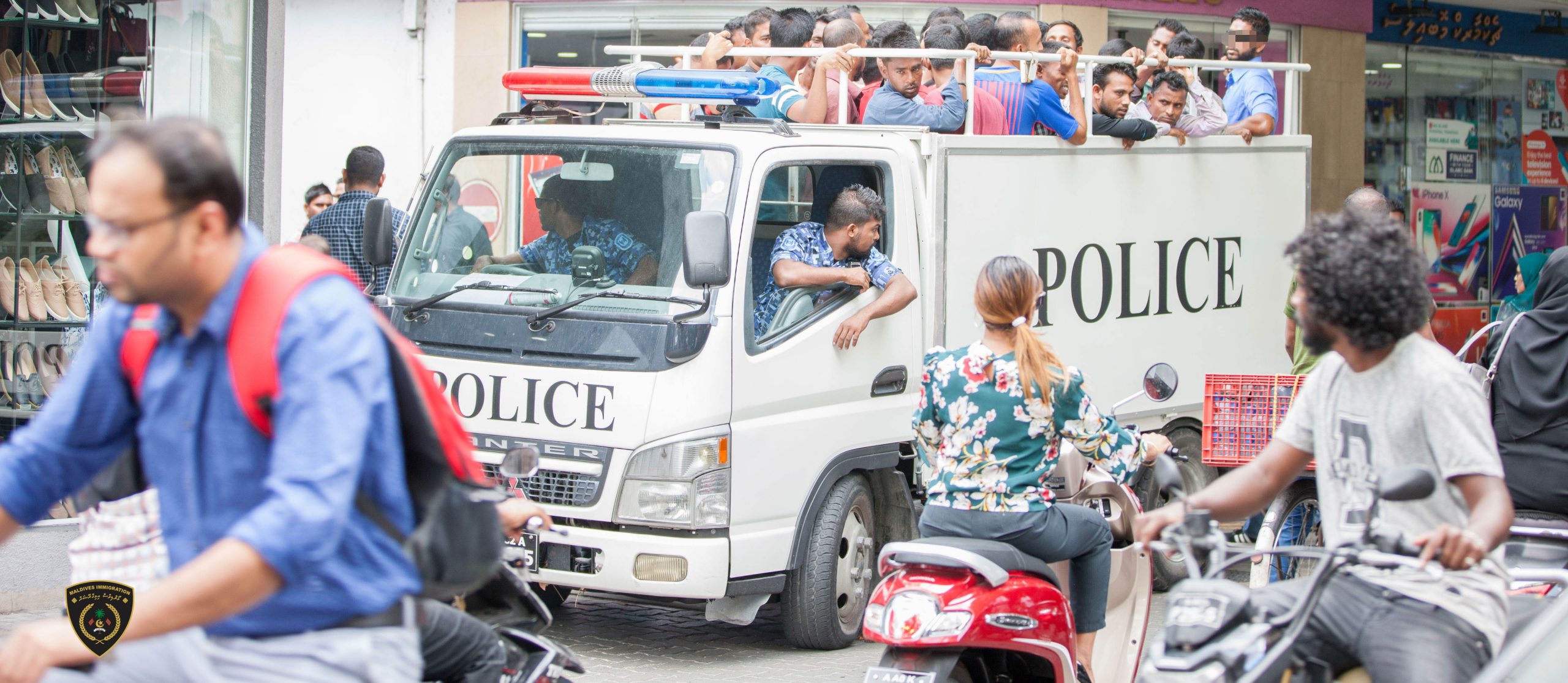
The Maldivian government has announced a large-scale initiative aimed at regularizing undocumented foreigners, marking one of the most significant steps taken in recent years to address the long-standing issue of irregular migrant workers in the country.
State Minister of Home Affairs Abdul Majeed Ibrahim revealed the plan while speaking on the state media program Raajje Mihaadhu. He explained that the initiative comes in response to alarming findings from the ongoing “Kurangi” operation, a program launched by the Home Ministry to collect biometric data of foreigners residing in the Maldives.
According to Abdul Majeed, the Kurangi operation has already gathered information from more than 160,000 foreigners, with records indicating that a large portion are living in the country without proper documentation. The issue, he stressed, is not solely the fault of the workers but often arises from the negligence of employers who fail to comply with legal procedures.
To address this, the ministry plans to conduct a comprehensive operation that will give undocumented foreigners a chance to legalize their status. The government has decided to allow approximately six months for the regularization process, a window aimed at easing the burden on both workers and employers.
The scale of the challenge is evident from past enforcement efforts. In just the last year and a half, 7,549 foreigners were deported for illegal activities, including conducting unauthorized businesses, overstaying visas, and involvement in criminal cases. Yet, officials believe deportations alone cannot resolve the issue, as undocumented workers continue to play a vital role in sectors such as construction, hospitality, and domestic work.
The presence of undocumented workers has long been a sensitive topic in the Maldives. While the economy depends heavily on migrant labor, irregular employment practices often expose workers to exploitation, unsafe living conditions, and lack of legal protection. The government’s decision to regularize their status is seen as an attempt to balance humanitarian concerns with regulatory enforcement.
Abdul Majeed emphasized that the new initiative is part of the government’s broader efforts to establish a sustainable framework for foreign employment in the Maldives. By collecting biometric data, strengthening oversight of employers, and offering a structured path to legalization, the ministry aims to ensure both compliance with the law and fair treatment of workers.
Observers note that success will depend not only on enforcement but also on the cooperation of employers, recruitment agencies, and foreign embassies. The upcoming six-month window will serve as a test of the government’s ability to turn policy into practice, potentially reshaping the country’s approach to foreign labor management.